

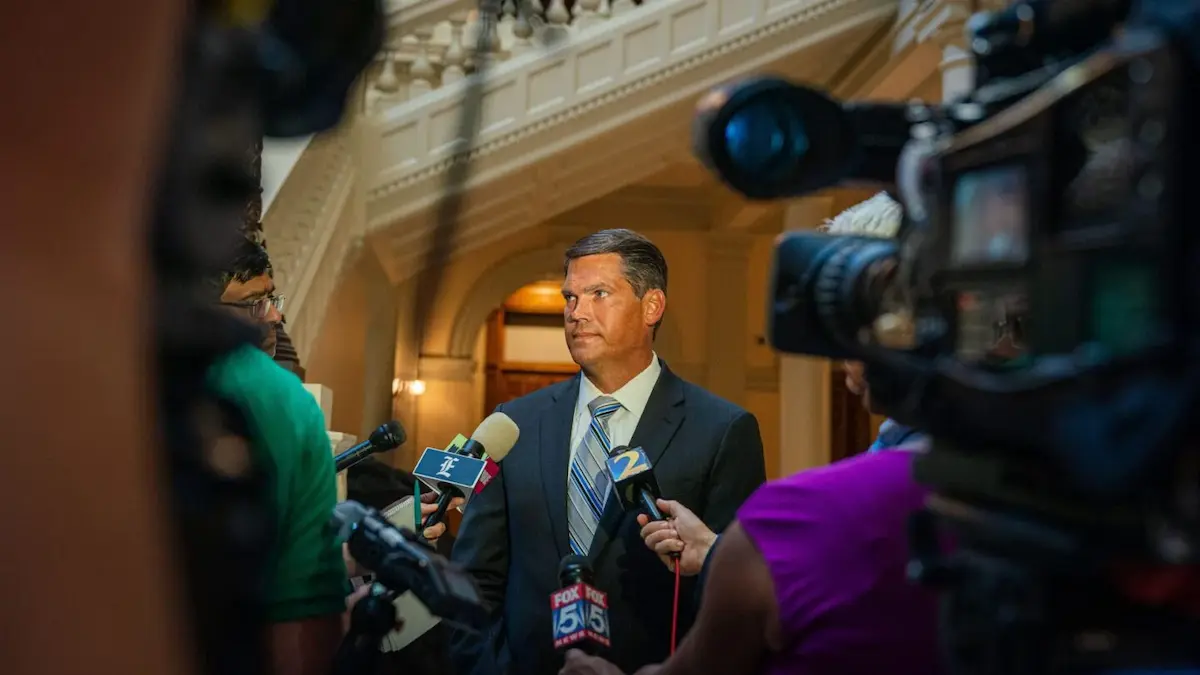
In a move resonating across US political circles, former Georgia Lieutenant Governor Geoff Duncan has officially joined the Democratic Party after years in Republican leadership. Duncan’s decision to switch parties underscores not just a personal evolution but also America’s shifting political landscape, a story rich with lessons for voters and leaders alike.
Personal Conviction over Party Line
Duncan, who served as Georgia’s lieutenant governor from 2019 to 2023, announced his new affiliation just months after being formally expelled from the state GOP. He shared that, for him, policy is about “loving your neighbor”—a value he felt the modern Republican Party no longer prioritized. In an op-ed for the Atlanta Journal-Constitution, Duncan explained his journey began well before the tumultuous 2020 election. His split with the GOP deepened as he watched the party’s approach to topics such as health care, Medicaid coverage, gun safety, and immigration.
Policy Differences That Couldn’t Be Ignored
Duncan has pointed to the high number of uninsured working-class Georgians—over eighty-five percent of the uninsured in his state have jobs but still lack access to affordable health care. He criticized recent Trump-backed legislation, arguing it slashed Medicaid and food assistance, undermining families in need.
Data from the Pew Research Center and other major surveys reveal most Americans now support expanded Medicaid access and stronger food safety nets, highlighting Duncan’s alignment with mainstream trends.
A Signal to an Evolving Electorate
Duncan’s public stance against overturning the 2020 election and his vocal criticism of extreme immigration measures, even speaking in support of Kamala Harris at the Democratic National Convention, show how his views now align far better with Democratic values. His case illustrates not just a personal saga, but how issues of compassion and practical policy continue to redefine party identities in Georgia and beyond.
Also read: Trump’s Potential Fed Pick Sparks Credibility Concerns Among Economists


