

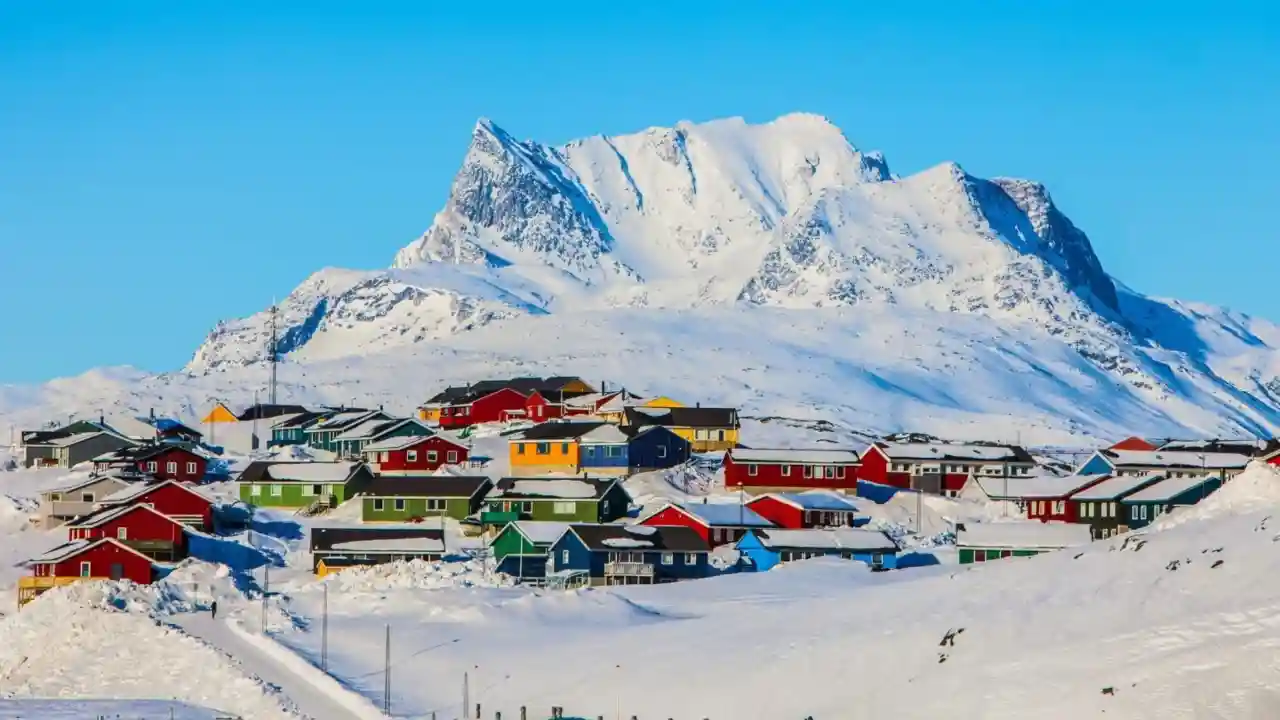
Tensions between the United States and Denmark have taken a new turn after Copenhagen summoned the top US diplomat in response to reports of covert American influence operations in Greenland. According to BBC News, Denmark’s foreign minister Lars Lokke Rasmussen described any attempt to interfere in the internal affairs of the Kingdom of Denmark as unacceptable. The accusations suggest American citizens were attempting to infiltrate Greenlandic society and promote the island’s secession from Denmark, potentially bringing it closer to US control.
Greenland, though semi-autonomous, remains firmly a part of the Danish kingdom, with Copenhagen overseeing its defence and foreign policy. Its vast Arctic territory, rich in natural resources, has transformed the island into a focal point of global interest. As climate change accelerates ice melt, the opening of new maritime routes and access to mineral reserves has amplified its strategic importance. This is why multiple nations, including China and Russia, have also been closely observing Greenland’s future.
Denmark’s security services have warned of various influence campaigns seeking to exploit divisions between Greenland and Denmark. These could take the form of disinformation, recruitment of pro-independence figures, or even economic leverage in an attempt to shift allegiances over time.
Why Washington Cares About Greenland
The United States has a long-standing interest in Greenland. During the Cold War, the US established the Thule Air Base in northern Greenland, which remains an essential site for its Arctic defense network. In recent years, American administrations have become more vocal about the island’s value. Donald Trump famously floated the idea of buying Greenland in 2019, a proposal Danish Prime Minister Mette Frederiksen firmly rejected as absurd. His renewed statements about not ruling out seizing the island by force have only deepened unease in Copenhagen.
Beyond its military position, Greenland holds economic potential. Its untapped reserves of rare earth minerals and hydrocarbons are crucial for renewable energy technologies, defense systems, and global supply chains. A report from the US Geological Survey highlights Greenland as one of the emerging frontiers for mining critical minerals, a sector where Washington is keen to reduce dependence on China.
However, polls suggest most Greenlanders do not seek US annexation. While several political parties favor eventual independence from Denmark, they envision a sovereign Greenland rather than incorporation into another nation. Greenland’s current leader Jens-Frederik Nielsen has made it clear: “We decide our own future.”
This standoff places Denmark in a delicate position. As a member of NATO and the European Union, it has historically been a close ally of Washington. Yet attempts by the US government to pressure or undermine Denmark’s authority in Greenland could weaken long-standing transatlantic ties.
What began as speculation has now turned into a significant diplomatic dispute, with Copenhagen issuing what analysts describe as a “diplomatic yellow card.” It is a warning signal that even close partners are not immune to friction when national sovereignty comes into question.
Read also: Texas Showdown: How Quorum Battles Shape the Future of Politics


