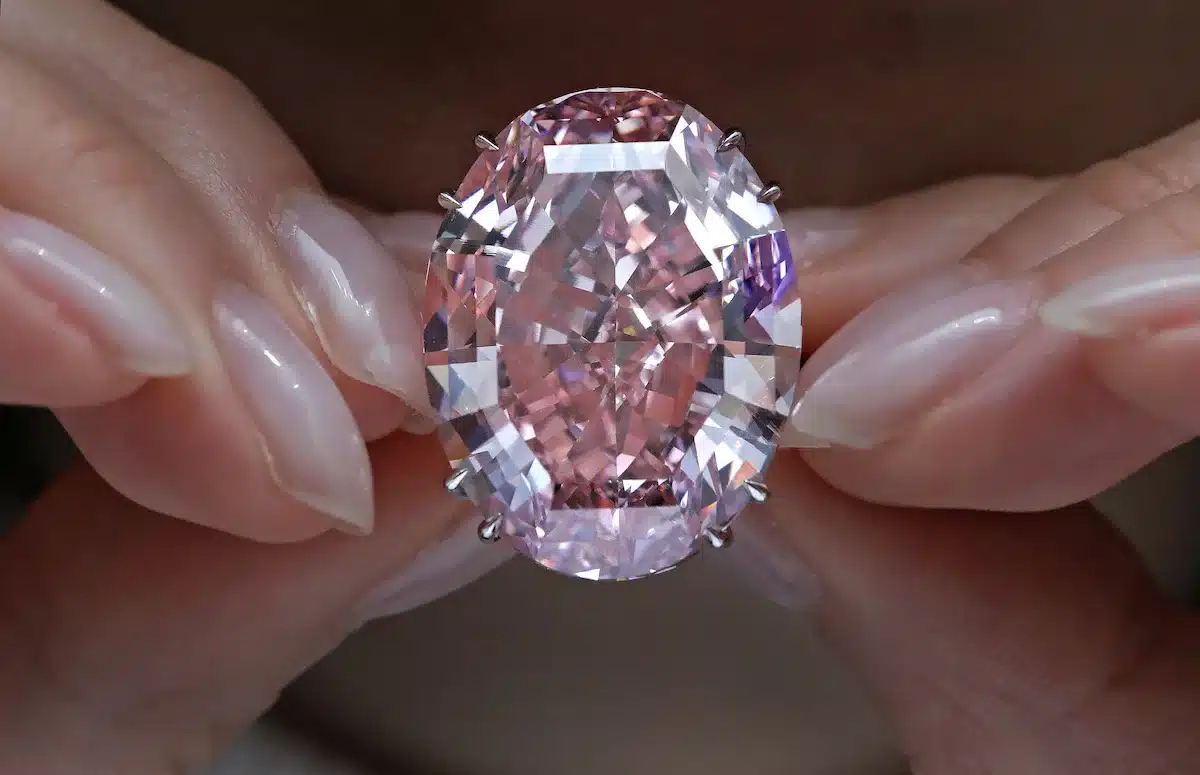
The closure of Western Australia’s Argyle mine in November 2020 marked the end of a remarkable chapter in gemological history and the beginning of an unprecedented experiment in luxury goods economics. For 37 years, this single mine produced over 90% of the world’s natural pink diamonds, making its closure a seismic event that fundamentally altered the global pink diamond landscape forever.
The Argyle mine’s final years were characterized by declining ore grades and increasing production costs, making continued operation economically unviable despite soaring pink diamond values. The mine’s closure wasn’t unexpected—Rio Tinto had announced the timeline years in advance—yet the market implications continue reverberating through the luxury goods sector as the reality of permanent supply exhaustion becomes apparent.
Immediate Market Disruption
The cessation of new pink diamond production has created market dynamics unlike anything previously observed in luxury goods markets. Wholesale prices for existing Argyle pink diamonds have increased by 30-50% annually since the closure, with no ceiling visible as collectors and investors compete for the finite remaining supply.
Auction houses report unprecedented interest in pink diamond lots, with bidding wars extending far beyond pre-sale estimates. The psychological shift from “extremely rare” to “irreplaceable” has transformed collector behavior, creating urgency that drives prices beyond traditional value metrics. This demand surge affects all quality levels, from commercial-grade stones to museum-quality specimens.
The New Rarity Paradigm
Post-Argyle pink diamond economics operate under entirely different principles than traditional gemstone markets. With no prospect of new supply, these gems have transitioned from renewable luxury goods to finite art objects, creating scarcity premiums that compound annually as stones disappear into private collections or are lost to damage.
The absence of new production has elevated previously overlooked pink diamond sources to unprecedented significance. Small-scale mines in Brazil, Russia, and Canada that produced negligible quantities compared to Argyle now represent the world’s entire pink diamond production capacity, though their combined output remains a fraction of Argyle’s historical production.
Cultural and Investment Implications
The Argyle prophecy has transformed pink diamonds into generational assets that families acquire with no intention of selling. This behavioral shift reduces market liquidity while simultaneously increasing values, creating a self-reinforcing cycle that pushes prices ever higher as available supply contracts.
Museums and educational institutions face new pressures to acquire pink diamonds for their collections before market prices exceed institutional budgets entirely. The scientific and cultural importance of these gems as geological specimens adds another layer of competition to an already constrained market.
Future Scenarios
Industry experts debate whether new pink diamond deposits might eventually be discovered, though geological evidence suggests the specific conditions that created Argyle’s pink diamonds were exceptionally rare. The possibility of successful synthetic pink diamond production looms as a potential market disruptor, though current technology remains far from replicating natural formation processes.
Legacy and Prophecy Fulfilled
The Argyle prophecy ultimately represents the intersection of geological rarity, human desire, and economic reality in creating a unique luxury goods category that operates according to its own rules. As the world’s pink diamond supply becomes increasingly finite, these gems serve as tangible reminders of Earth’s capacity to create beauty so rare that its loss becomes irreplaceable, making each surviving pink diamond a precious fragment of geological history that grows more valuable with each passing day.
Also read: Lab-grown Diamonds across Cultures: Adoption and Perceptions Worldwide