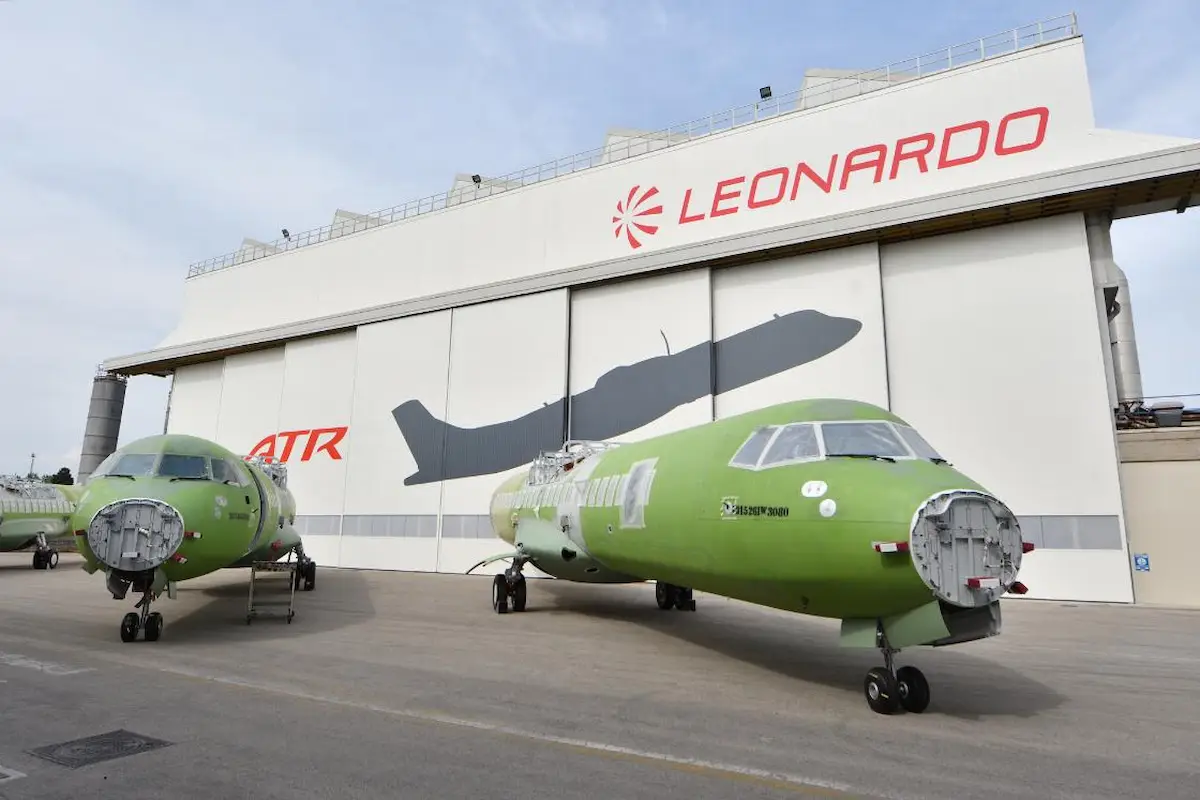
ATR—a joint venture of Airbus and Leonardo—is the world’s leading manufacturer of regional aircraft, known for its efficient turboprop airliners. Since its founding in 1981, ATR has delivered over 1,700 aircraft to around 200 airlines, playing a vital role in connecting more than 100 countries. This leadership comes with a responsibility to address aviation’s environmental impact. The aviation sector contributes roughly 2.5% of global CO₂ emissions, and regional flights are essential for remote communities.
ATR’s mission is to accelerate sustainable connections—providing crucial links for people and economies while dramatically reducing the carbon footprint of regional air travel.
Regional Connectivity with Low-Emission Turboprops
ATR’s turboprop aircraft are specifically engineered for short-haul routes and difficult terrains, enabling airlines to serve secondary cities, island communities, and mountainous regions that jets cannot reach either physically or economically. They can take off and land on short or semi-prepared runways, making previously underserved destinations accessible. Each year, ATR-operated flights open about 120 new regional routes, linking isolated areas with essential services like healthcare, education, and commerce.
Crucially, this inclusive connectivity comes with a smaller environmental footprint. Turboprop technology is inherently fuel-efficient for short flights – for example, the 78-seat ATR 72-600 uses approximately 45% less fuel and produces an equivalent reduction in CO₂ emissions compared to similar size regional jets on short-haul routes. By using significantly less fuel, ATR aircraft enable vital regional mobility with lower emissions and cost, keeping remote communities connected more sustainably.
Innovations Driving Greater Efficiency
ATR continually innovates to make regional aviation more responsible and more economical. In 2022, it introduced the Pratt & Whitney Canada PW127XT engine across its fleet, bringing immediate efficiency gains. ATR 42/72 models equipped with this latest turboprop engine burn at least 3% less fuel than previous versions and also enjoy 20% lower maintenance costs. This upgrade underscores how incremental design improvements can cut emissions.
Looking ahead, ATR is exploring the next-generation concept called the “ATR EVO.” This future turboprop, expected to enter service in the mid-2030s, will feature hybrid-electric propulsion and airframe enhancements for significantly improved sustainability. The ATR EVO aims for 100% sustainable aviation fuel compatibility and a significant reduction in fuel burn and CO₂ emissions versus today’s models.
It will remain a twin-engine turboprop, pairing an ultra-efficient thermal engine with an electric motor to optimize efficiency across all phases of flight. Through such innovations – advanced engines, hybrid readiness, and aerodynamic improvements – ATR is driving down emissions per flight while preserving the affordability and versatility of regional air service.
Pioneering Sustainable Aviation Fuel (SAF) Adoption
ATR is at the forefront of adopting sustainable aviation fuels (SAF) as a near-term solution to decarbonize flying. In June 2022, ATR made aviation history by successfully operating the first ever commercial regional aircraft flight on 100% SAF in both engines. This landmark test, conducted with partners Braathens Regional Airlines and Neste, demonstrated that a turboprop airliner could safely run entirely on renewable fuel.
SAF – produced from renewable feedstocks like waste oils and biomass – can reduce lifecycle carbon emissions by up to 80% compared to conventional jet fuel. ATR’s aircraft are already certified to fly on 50% SAF blends today, and the company is working to certify its full fleet for 100% SAF by 2030 (pending final ASTM fuel standard approvals). Importantly, ATR is not waiting for 2030 to act: since August 2023, all its production test flights have used a 30% SAF blend, cutting nearly four tonnes of CO₂ emissions on each flight.
ATR also offers customers the option to use SAF on new delivery flights, underscoring its commitment to immediate carbon reduction in operations. These initiatives align with broader industry goals – experts estimate that sustainable fuels could contribute around 65% of the CO₂ reductions needed for aviation to reach net-zero by 2050. By proving SAF’s viability in everyday regional flying, ATR is accelerating the transition to alternative fuels and providing a benchmark for low-emission aviation worldwide.
Commitment to a Sustainable Future
All of ATR’s efforts are anchored by a clear long-term climate strategy. The company has committed to contributing to the industry’s net-zero carbon emissions goal by 2050. It has set rigorous near-term emissions targets that have been validated by the Science Based Targets initiative to ensure consistency with the Paris Agreement’s 1.5°C pathway. Reaching these goals requires collaboration across the industry, and ATR actively works with partners to drive change. It is a member of international coalitions like the Air Transport Action Group and has endorsed the sector’s “Fly Net Zero 2050” pledge.
ATR also collaborates with engine manufacturers and fuel suppliers – for example, teaming with Pratt & Whitney Canada to ensure its PW127 series engines will be 100% SAF-ready – and with airlines and lessors to promote low-emission operations (such as delivery flights powered by SAF blends). Leveraging the aerospace expertise of its parent companies Airbus and Leonardo, ATR integrates advanced technologies and sustainable design practices into its products and services.
In summary, ATR is demonstrating that the future of regional aviation can be sustainable without sacrificing connectivity or economic viability. Its high-efficiency turboprops already enable low-emission, inclusive air travel to communities off the beaten path. Now, through innovation in propulsion, bold adoption of SAF, and science-based climate targets, ATR is actively shaping a better trajectory for regional flight. The company’s progress shows that the transition to low-carbon aviation is well underway—delivering real reductions in emissions today and laying the groundwork for a net-zero regional aviation ecosystem in the years to come.
Also read: The Low Cost Perimeter Aviation Airline Flying on Energy