

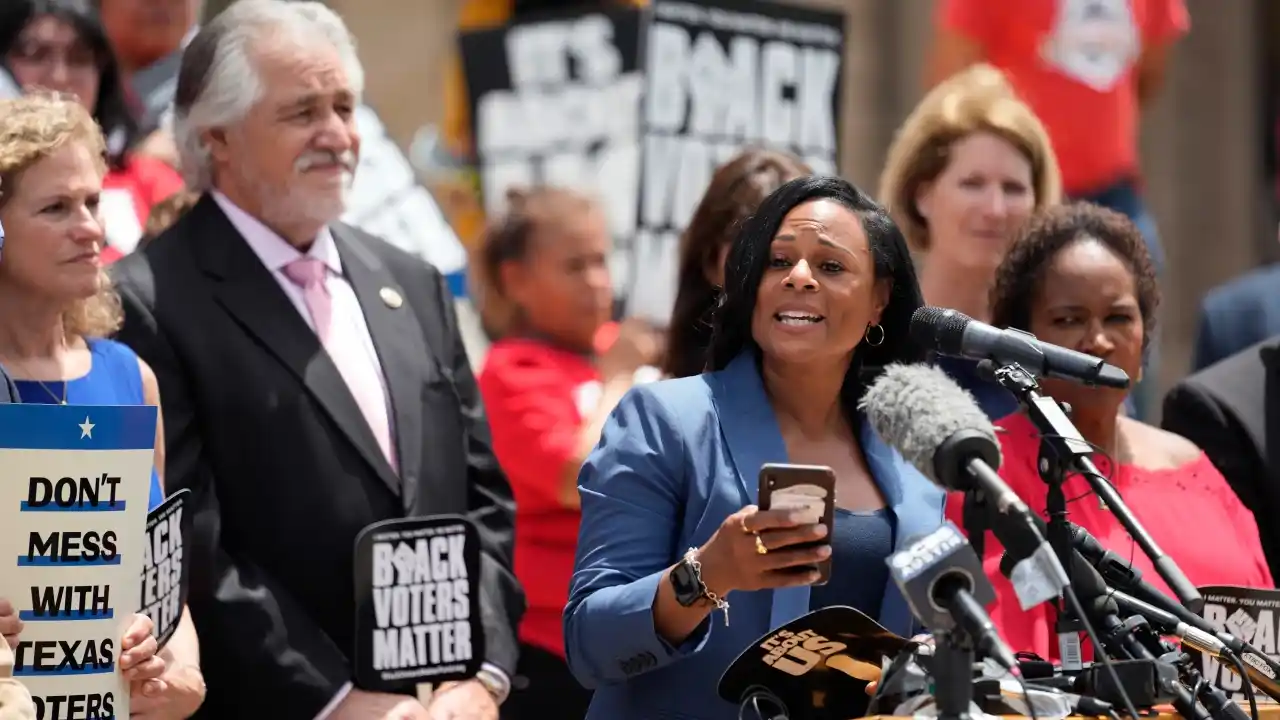
In August 2025, Texas state Representative Nicole Collier made headlines when she chose to stay overnight in the Texas State Capitol rather than comply with a new Republican rule that required Democrats to be monitored by state police officers while in the building. This act of defiance highlighted the intense political battle over redistricting, a process that could shift congressional power in favour of Republicans in the upcoming 2026 midterm elections.
A Protest Rooted in Principle Amidst Partisan Redistricting Struggles
Nicole Collier, a Democrat representing Fort Worth and now in her seventh term, was among over 50 Texas House Democrats who had left the state earlier in an extended walkout. Their strategy was to prevent Republicans from reaching the quorum needed to approve new congressional district maps heavily influenced by former President Donald Trump’s push to maintain Republican control in the U.S. House of Representatives.
On returning to the Capitol in mid-August for a special legislative session aimed at resolving the redistricting deadlock, Republican leaders imposed strict rules: Democrats had to remain inside the Capitol and could only exit if escorted by Department of Public Safety officers. Collier refused to sign the required permission slip accepting police monitoring, describing the measure as a violation of her dignity and freedom as an elected representative. She called the Republican surveillance a form of “illegal confinement,” supported by legal petitions challenging the GOP’s restrictions.
By spending the night inside the Capitol, sleeping on a chair wrapped in a blanket, Collier emphasized her resistance to what she viewed as overreach and intimidation. Fellow Democratic representatives joined her overnight with snacks and solidarity, turning the Capitol floor into a place of peaceful protest. Her stand draws attention to the increasingly aggressive tactics used in state legislatures as redistricting battles become national flashpoints.
Why Texas Redistricting Matters on the National Stage
Redistricting in Texas carries national weight because the state’s congressional representation impacts the balance of power in Washington. Republicans want to capitalize on demographic shifts and recent census data to redraw districts to their advantage, potentially flipping several seats that Democrats currently hold. This manoeuvring is part of a broader GOP strategy encouraged by Trump and other party leaders to secure a stable majority in the House during the 2026 midterms.
Democrats argue that the Republican-proposed maps dilute minority voting strength and unfairly undermine their party’s chances. They also see their walkout and protests as necessary tactics to buy time, raise public awareness, and push for a more equitable redistricting process. Governor Greg Abbott and Texas Republican House Speaker Dustin Burrows have criticized these actions, accusing Democrats of neglecting their legislative duties and stalling governance on other critical issues.
The clash between Collier and GOP leadership encapsulates the deep partisan divide currently gripping Texas politics and reflects a national pattern where state legislatures become battlegrounds for electoral control. Collier’s choice to stay inside rather than submit to police escort rules symbolizes a fight not just over voting maps, but over political freedom, representation, and the democratic process itself.
Read also: Trump, Zelensky, and Putin: A Complex Dance Toward Peace in 2025


