Have you ever wondered how do you clean turf after installing it in your yard? It’s actually one of the easiest maintenance tasks you’ll face—which is precisely why synthetic turf is becoming increasingly popular among homeowners like me. I used to spend countless hours mowing, watering, and caring for my natural lawn, only to watch it turn brown during drought seasons or become muddy after heavy rain.
Today, synthetic turf offers an exciting alternative for those of us seeking a low-maintenance lifestyle. No more weekend mornings lost to yard work or frustration over brown patches. In fact, many homeowners are making the switch simply because synthetic grass stays green and clean year-round with minimal effort. Throughout this article, I’ll share why synthetic turf might be the solution you’ve been looking for, what benefits it offers, important considerations before installation, and where it works best in modern homes.
What makes synthetic turf appealing today
The modern appeal of synthetic turf goes far beyond its initial introduction in the 1960s. Unlike those early days when options were limited, today’s artificial grass offers multiple benefits that make it increasingly attractive for homeowners seeking practical solutions.
No mowing, watering, or fertilizing
One of the biggest advantages of synthetic turf is the dramatic reduction in maintenance requirements. I’ve found that eliminating the need for mowing, watering, and fertilizing saves significant time and money. Traditional lawns demand regular upkeep—weekly mowing, constant watering, and seasonal fertilizing—while artificial grass requires almost none of these tasks.
Additionally, synthetic turf can pay for itself within 3-5 years when you consider the ongoing costs of natural lawn maintenance. A natural lawn typically consumes about 56,000 gallons of water annually for just 1,000 square feet—with artificial turf, that water usage drops to zero. Beyond water savings, you’ll also eliminate expenses for lawn care services, equipment maintenance, and chemical treatments.
Stays green all year round
Unlike natural grass that browns during drought or dormant seasons, synthetic turf maintains its vibrant appearance year-round. Thanks to modern UV stabilizers, today’s artificial grass resists fading and discoloration, even under intense sunlight or harsh weather conditions.
Furthermore, this consistent appearance remains unaffected by seasonal changes. Whether it’s the middle of summer or the depths of winter, your lawn maintains that freshly manicured look without additional effort.
Works in places where grass won’t grow
Perhaps most impressively, synthetic turf thrives where natural grass struggles:
- Steep slopes and difficult terrain
- Heavily shaded areas with minimal sunlight
- High-traffic zones that would typically become worn and muddy
- Rooftops, balconies, and areas without soil
Since artificial grass doesn’t require sunlight, water, or soil to maintain its appearance, it opens up new possibilities for creating green spaces. This versatility makes it particularly valuable for urban environments or challenging landscape areas where maintaining natural grass would be nearly impossible.
When it comes to cleaning, synthetic turf only requires an occasional hose-down and light brushing to keep it looking fresh —a stark contrast to the intensive care natural lawns demand.
Key benefits of synthetic turf for homeowners
Switching to artificial grass offers substantial practical advantages for busy homeowners. Let’s explore the specific benefits that make synthetic turf increasingly popular for residential properties.
Saves time and effort on yard work
Gone are the days of spending hours each weekend maintaining your lawn. Most homeowners dedicate at least an hour weekly to lawn care, but those with larger yards might spend upwards of six hours. With synthetic turf, you’ll eliminate the need for mowing, edging, fertilizing, and re-seeding. Consequently, you’ll reclaim countless hours previously spent on yard maintenance for family activities or personal hobbies.
Reduces water bills and chemical use
The financial savings from synthetic turf are impressive. The average grass field consumes about 50,000 gallons of water weekly during growing season. Moreover, residential water usage shows that 54% of all household water goes toward landscape maintenance. By installing synthetic turf, you’ll cut your water usage by more than half, significantly reducing your utility bills.
Beyond water conservation, you’ll eliminate the need for chemical fertilizers, pesticides, and herbicides. This not only saves money but creates a healthier environment around your home.
Durable for pets and kids
Synthetic grass provides a remarkably resilient surface for active families. It withstands heavy foot traffic without developing bare patches or becoming muddy. The soft, cushioned texture offers safer footing for children and pets, reducing fall-related injuries. Plus, how do you clean turf after pets use it? Simply rinse with water to wash away urine and remove solid waste promptly.
Improved drainage and cleaner surfaces
High-quality synthetic turf features permeable backing that allows water to drain efficiently, preventing puddles and standing water. This quick-draining capability means your outdoor spaces remain usable shortly after rainfall—no mud or waterlogging to worry about.
The drainage benefits extend to cleanliness as well. Specifically, synthetic turf eliminates tracking mud into your home and reduces the amount of dirt and debris children and pets bring indoors. This creates a cleaner living environment throughout your home, not just in your yard.
What to consider before switching to synthetic turf
While synthetic turf offers numerous advantages, making an informed decision requires understanding potential drawbacks. Let’s examine the key factors you should consider before making the switch.
Upfront installation costs
The initial investment remains the biggest hurdle for most homeowners. Professional installation costs typically range between $16.03-$19.68 per square foot, with total project expenses averaging $7,400-$9,350 for a standard 500-square-foot area. This upfront cost can be substantially higher than establishing a natural lawn, despite long-term savings.
Heat retention in sunny areas
Unfortunately, synthetic turf can become uncomfortably hot in direct sunlight. Surface temperatures can reach a scorching 160-170°F on hot summer days, compared to natural grass that rarely exceeds 100°F. This extreme heat not only makes the surface unusable without watering it down first, nonetheless it can cause discomfort, skin burns, and increase risks of heat-related illness, especially for children.
Limited natural feel and smell
Although high-quality artificial turf looks increasingly realistic, the texture experience differs noticeably from living grass. The synthetic blades tend to be stiffer and cooler to the touch, lacking the natural variability and softness of real grass. Altogether, you’ll miss that freshly-cut grass smell and the subtle springiness beneath your feet that natural lawns provide.
Environmental concerns with materials
Despite water conservation benefits, synthetic turf raises several environmental concerns. Many products contain potentially harmful chemicals including lead, PFAS (forever chemicals), and other toxins. These chemicals can leach into soil and groundwater systems. Furthermore, artificial turf contributes to microplastic pollution as it breaks down and typically ends up in landfills after its 8-10 year lifespan, as recycling options remain limited.
Regarding maintenance, even though synthetic turf requires less upkeep, you’ll still need to address how do you clean turf regularly. Annual maintenance costs average $250-$350, including periodic brushing, occasional rinsing, and infill replenishment to keep your artificial lawn looking its best.
Where synthetic turf fits best in modern living
Synthetic turf has found its place in diverse settings beyond traditional lawns. Let’s examine where this versatile surfacing solution works best in today’s living environments.
Backyards and patios
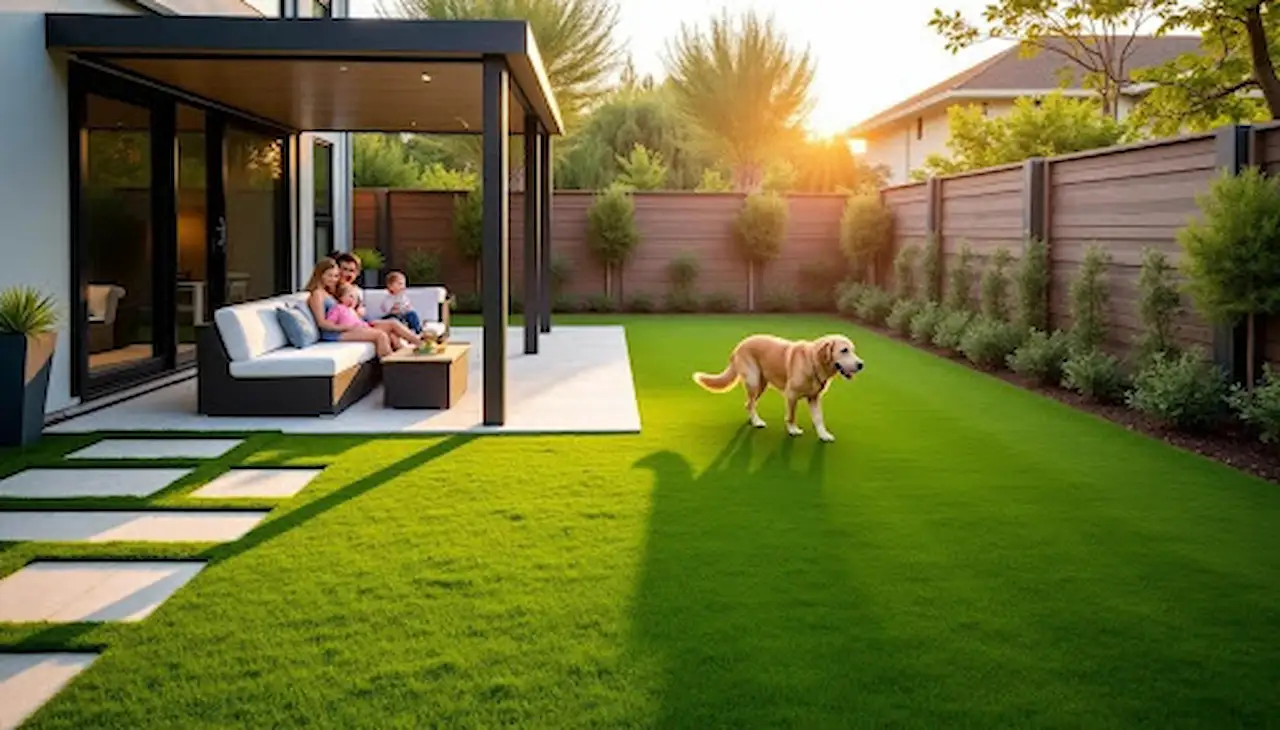
Artificial grass transforms ordinary backyards into low-maintenance outdoor living spaces. It works exceptionally well for breaking up expanses of hardscape in small yards. With its durability against heavy foot traffic, synthetic turf creates perfect transitions between paved areas and surrounding gardens. Regarding maintenance, how do you clean turf in backyard settings? Simply hose down occasionally and brush as needed to keep it looking fresh.
Pet runs and play areas
Pet-specific synthetic turf offers specialized benefits, including rapid drainage of up to 1,200 inches per square yard. These systems feature antimicrobial properties that prevent odors—crucial for dedicated pet areas. For families, artificial turf provides a safer play surface than traditional materials, creating a cushioned landing pad under swing sets and play equipment.
Rooftops and balconies
Urban dwellers increasingly install synthetic turf on rooftops and balconies to create green spaces where natural grass cannot grow. These installations require no soil and weigh significantly less than real grass. Above all, proper drainage systems are essential for these applications..
Schools, parks, and sports fields
In America alone, approximately 13,000 synthetic turf sports fields exist, with roughly 1,500 new installations annually. Furthermore, synthetic fields cost about $3.85 per event across 1,000 annual uses, compared to $1,362.50 per event for natural grass limited to 40 yearly events. Equally important, synthetic turf provides universal accessibility for wheelchairs and mobility devices.
Conclusion
Synthetic turf stands as a practical solution for homeowners seeking freedom from traditional lawn maintenance. After weighing the benefits against potential drawbacks, many families like mine find the time saved and consistent appearance well worth the initial investment.
The advantages certainly speak for themselves. No more mowing, watering, or fertilizing translates to reclaimed weekends and significantly reduced water bills. Additionally, the durability synthetic turf offers against pet wear, children’s play, and high-traffic areas makes it particularly valuable for active households.
However, careful consideration remains essential before making the switch. The upfront costs, heat retention issues, and environmental concerns present legitimate factors to evaluate against your specific needs and values. Most importantly, understanding how to clean turf properly—with occasional hosing down and light brushing—ensures your investment maintains its appeal for years.
Synthetic turf works best when strategically placed in areas where natural grass struggles or maintenance proves challenging. Backyards, pet areas, rooftop gardens, and sports fields demonstrate the versatility this option provides across different settings.
The growing popularity of synthetic turf reflects our changing priorities as homeowners. We increasingly value time efficiency, resource conservation, and practical solutions that align with busy lifestyles. Though natural grass will always hold its traditional appeal, synthetic alternatives offer a compelling option for those of us ready to embrace low-maintenance living without sacrificing the look of a lush, green landscape.
Also read: Transform Your Outdoor Space: Expert Tips to Blend Beauty with Everyday Function