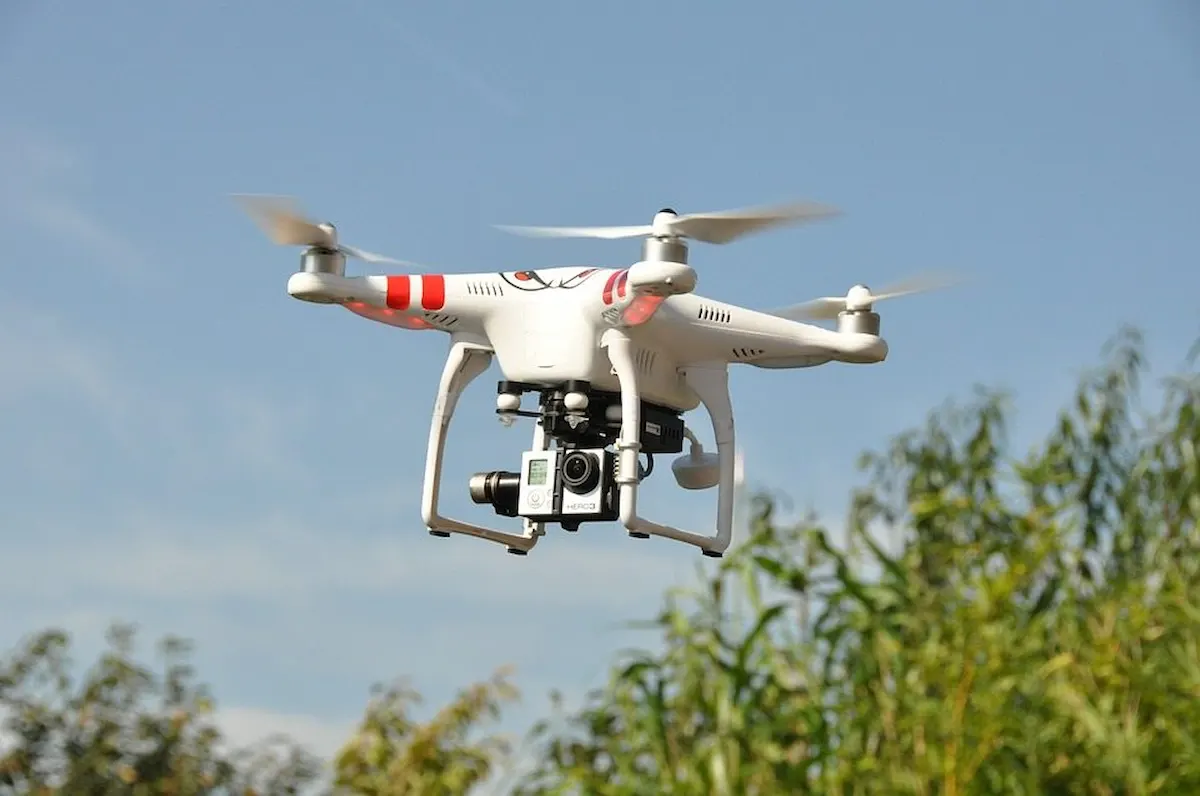
It is easy to fall in love with the futuristic edge of drone technology. The imagery alone, high-flying machines surveying vast landscapes, capturing crisp data, and transforming the way we interact with the world — evokes innovation. But when I look at the trajectory of drone development, what excites me most isn’t just the tech. It’s the potential to create solutions that serve both bottom lines and people.
Too often, the conversation about innovation splits into two camps. On one side, there’s the startup hustle, focused on rapid scaling and high returns. On the other, there are nonprofits and government agencies seeking practical tools to solve urgent problems. What if we didn’t have to choose between the two? What if we designed drone tech that worked for both business and communities?
That is the challenge that keeps me inspired. And it is where I believe the real magic happens.
Tech That Serves More Than the Market
The truth is, many of the tools we’re building in the commercial drone sector, like precision mapping, environmental monitoring, and autonomous delivery don’t need to live in separate silos. What helps a logistics company track assets can also help emergency responders deliver medicine to remote villages. What helps a farmer scan for crop stress can also help conservationists monitor deforestation.
When I started looking deeper into drone applications, I saw a consistent pattern: the same core technologies that drive business efficiency can be life-changing in humanitarian settings. But what was missing was intentional design. Too many startups chase a single buyer. Too many investors look for narrowly defined markets. We need a shift in mindset. One where scalability is baked into both profitability and public good.
At the heart of this is what I call “mission-aligned versatility.” A drone company doesn’t need to operate like a charity to make an impact. It just needs to prioritize building tools that can operate in multiple contexts.
The Power of Dual-Use Design
Consider the idea of dual-use design, technology created with both commercial and public applications in mind. It is a concept with military roots, but it is increasingly relevant in civil sectors. The same drone that inspects oil pipelines for a major energy firm can also scan coastal erosion for a nonprofit trying to protect local habitats. The opportunity lies in designing hardware and software that can toggle between those use cases without extra cost or customization.
I’ve seen early-stage companies that limit themselves because they think community-oriented work is a distraction from revenue. But in reality, solving for multiple markets from the start creates more durable, adaptable products. It also opens the door to public-private partnerships, pilot programs, and social impact funding — all of which can accelerate a company’s growth and visibility.
From my experience, both business leaders and social innovators are hungry for these kinds of crossover tools. What they lack is a shared language and framework for collaboration. Drone companies can play that connector role if they are thoughtful in how they develop and deploy their tech.
Earning Trust in Two Worlds
One of the biggest challenges in building technology that serves both business and communities is trust. Private sector clients want reliability, scalability, and ROI. Community groups want transparency, accessibility, and evidence of impact. Meeting those needs requires not just engineering talent, but strong communication, field testing, and stakeholder engagement.
Ryan Rearden, who has worked across aerospace innovation and community-based technology projects, often emphasizes the importance of “ground truth” — making sure drones work not only in theory or in ideal lab conditions, but in the messy, complex realities of fieldwork. That principle matters whether you are selling to a logistics company in Los Angeles or a disaster response nonprofit in the Philippines.
Building trust also means making your technology usable by a wide range of people. It’s not just about the drone itself. It’s about the software interface, the data reporting tools, the training materials, and the support systems. If only a team of engineers can use it, your tech won’t scale. But if a high school teacher or a local volunteer can operate it with a few hours of guidance, now you’ve built something that matters.
Funding the Future of Scalable Impact
This is where investors come in. And it’s where business leaders need to rethink what it means to back a promising company. ROI still matters. But impact is a form of long-term value too. If you invest in a drone platform that helps detect wildfires early, or one that improves medical supply chains in rural areas, you are creating real resilience — and, over time, real returns.
We are entering a phase where drone applications will no longer be seen as niche. They will be integrated into agriculture, public safety, education, and climate adaptation. Investors who get in now, and who back companies that think bigger than a single market, will shape that future.
I believe the most powerful startups of the next decade will be those that resist the urge to silo. They will build adaptable tools that serve multiple sectors. They will form partnerships with nonprofits, government agencies, and global enterprises. They will think beyond the next funding round and toward the next generation of outcomes.
Beyond the Horizon: What We’re Building Toward
Ryan Rearden once said, “The next wave of innovation won’t be about drones that fly higher or faster. It will be about drones that connect the dots between people, places, and problems.” That quote stays with me as I think about where we’re headed.
Building drone technology that bridges business and community needs is not always easy. It requires extra effort, broader consultation, and a commitment to impact that goes beyond buzzwords. But it is also deeply rewarding. When you see your platform used to help a farmer save a season’s harvest or a firefighter locate a missing person, it changes how you define success.
For entrepreneurs, it is an opportunity to build something truly lasting. For investors, it is a chance to fund technology that actually moves the needle on global challenges. For communities, it means having access to tools that were once reserved for the elite.
Real Solutions, Real Impact
The world doesn’t need more gadgets. It needs more grounded solutions. Drones offer a rare combination of reach, precision, and adaptability. When developed with care, they can serve both the marketplace and the public square.
The future of drone innovation will belong to those who see these sectors not as separate, but as connected. The companies that will lead are the ones willing to build with purpose, partner with humility, and scale with vision.
It’s time we stop choosing between business and community. We can, and should, build for both.
Also read: Understanding The Role of Police Drones in Urban Safety