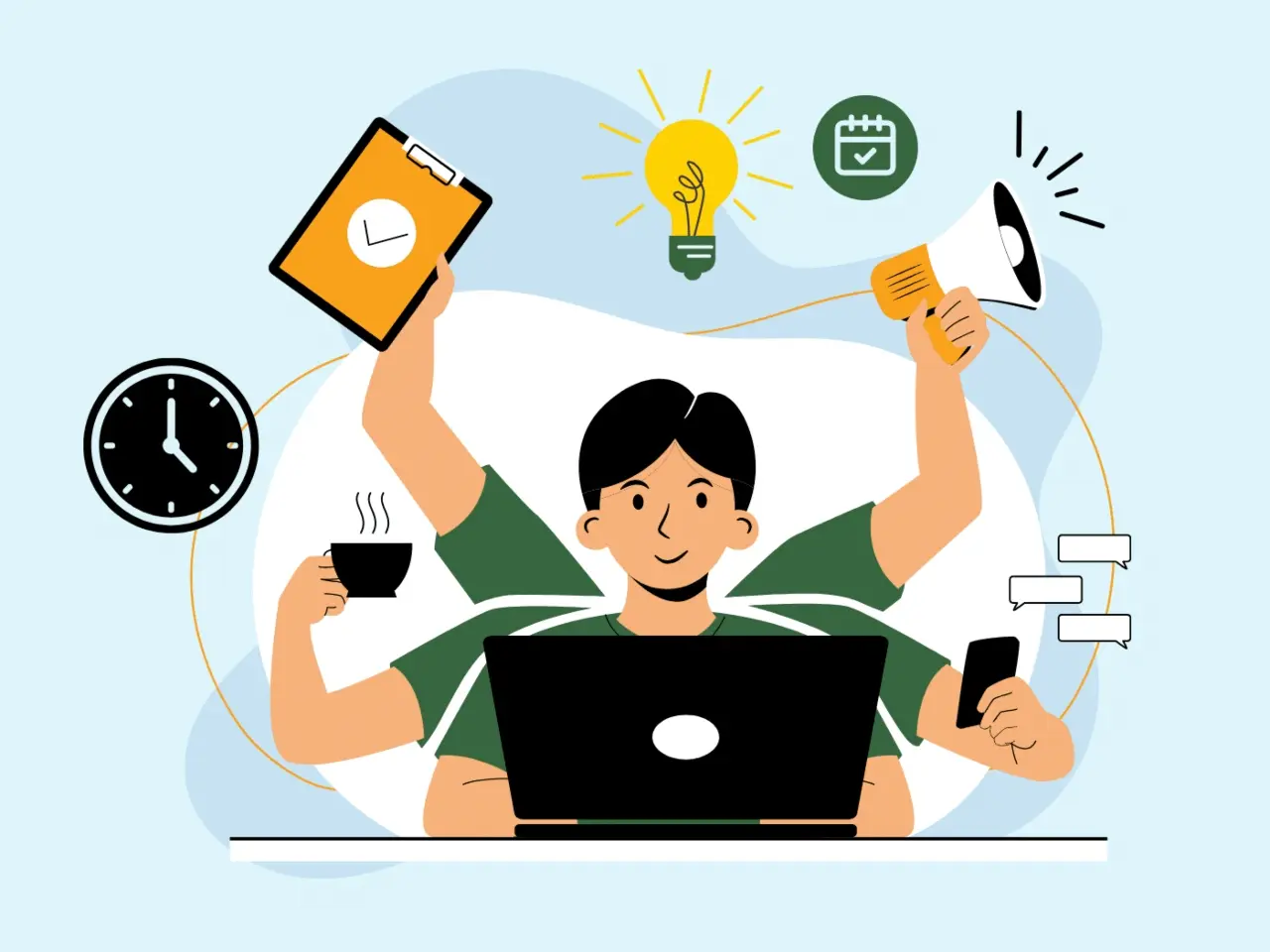
Productivity is not about cramming more hours into your schedule. It’s about learning how to work with your energy, attention, and environment so you can achieve more meaningful results without burning out. The modern workplace, especially for professionals in the United States demands a balance between speed, quality, and adaptability. Yet many workers struggle with constant interruptions, unclear priorities, and information overload.
The good news is that you don’t need a radical life change to start seeing improvements. By integrating small but powerful productivity hacks, you can unlock better focus, reduce stress, and get more done each day. These strategies are rooted in science, supported by experts, and tested in real work environments.
The Science Behind Productivity Habits
Before diving into specific hacks, it’s useful to understand why these practices matter. Research published in the Harvard Business Review shows that productivity is strongly linked to how we manage attention and decision-making, not just raw effort. The human brain has limited cognitive resources. Every time you switch tasks or make a decision, you use up mental energy.
The American Psychological Association has found that task-switching can cost as much as 40 percent of productive time in a workday. This explains why multitasking often feels busy but results in less output. Similarly, the University of California, Irvine, discovered that after an interruption, it can take over 20 minutes to fully regain focus.
Productivity hacks are not just trendy tips. They are methods designed to conserve mental resources, align tasks with natural energy cycles, and cut unnecessary friction. When applied consistently, they create a system that lets you do more in less time, while also improving creativity and reducing stress.
Hack 1: Align Work with Your Biological Prime Time
Every person has a biological prime time, the period in the day when their brain is at peak performance. For some it’s early morning, for others it might be late at night. The key is to observe your natural rhythm. When do you feel sharpest? When do you find deep work flows naturally?
Productivity skyrockets when high-value tasks are scheduled during these peak windows. For US professionals working in competitive environments, using this approach can make the difference between struggling through complex projects and finishing them with clarity.
Practical example: If you are a marketing manager who feels most focused between 9 AM and noon, reserve that time for campaign strategy, analytics, or creative writing. Push less demanding tasks like email replies or meeting scheduling to the afternoon slump.
This hack is especially important for remote workers who have more control over their schedules. By aligning tasks with your energy rather than the clock, you maximize results and reduce mental fatigue.
Hack 2: Conduct a Weekly Priority Audit
Many people confuse being busy with being productive. A priority audit solves this problem by forcing you to step back and ask: What really matters this week?
At the end of each week, spend 20 to 30 minutes reviewing your accomplishments and upcoming responsibilities. Categorize them using the Eisenhower Matrix—important and urgent, important but not urgent, urgent but not important, and neither. This method was popularized by President Dwight Eisenhower and is still taught in productivity workshops across the US.
Leaders who apply this system consistently outperform peers who focus only on urgency. The audit clarifies where to spend energy and prevents “reactive working,” where your day is consumed by emails and last-minute tasks instead of strategic progress.
Practical example: A software developer might realize that although bug fixes feel urgent, the more important task is learning a new framework critical for next month’s release. By consciously allocating time to that, long-term impact increases.
For individuals working in corporate America, where performance is often measured quarterly, the weekly audit ensures alignment with long-term goals while keeping immediate needs under control.
Hack 3: Time Blocking for Deep Focus
If you’ve ever ended a day feeling like you worked constantly but achieved little, chances are your time was scattered. Time blocking is the antidote. Instead of leaving your day open-ended, you schedule specific blocks for specific tasks.
Cal Newport, author of Deep Work, emphasizes that humans are not wired for constant multitasking. When you allocate two hours strictly for project development or one hour for writing reports, you minimize decision fatigue and protect mental energy.
A survey by LinkedIn found that professionals who practice time blocking report higher satisfaction and greater output compared to those who let tasks flow freely. It works particularly well in environments filled with digital distractions, were endless notifications fragment attention.
Practical example: A financial analyst might block 9 AM to 11 AM for market research, 11 AM to noon for client reports, and reserve 2 PM to 3 PM for team collaboration. By batching tasks into focused slots, switching costs are reduced, and the day feels more structured.
Time blocking also works in personal life. Scheduling workouts, meal prep, or even relaxation ensures those priorities don’t get lost in the rush of work. Over time, this structured rhythm creates balance and predictability, which reduces stress.
Hack 4: Start Small with the Two Minute Rule and Micro Steps
One of the biggest roadblocks to productivity is simply getting started. Psychologists call this the activation barrier, the resistance your brain feels before beginning a task. The longer you delay, the more intimidating the task becomes.
The Two Minute Rule, popularized by David Allen in Getting Things Done, suggests that if a task takes less than two minutes, you should do it immediately. Whether it’s replying to a short email, filing a document, or scheduling a meeting, completing it right away prevents it from cluttering your mental to-do list.
But what about tasks that take longer? That’s where micro steps come in. Breaking tasks into smaller actions reduces stress and increases follow-through. For example, instead of telling yourself, I need to write a 10-page report, start with I’ll just write the introduction. The brain responds positively to progress, no matter how small.
Practical example: Imagine you’re an HR manager needing to draft a new onboarding guide. Instead of blocking off hours, start with two minutes: outline the first three bullet points. Once started, momentum builds naturally.
For US professionals juggling multiple priorities, the Two Minute Rule is a lifesaver. It prevents simple tasks from snowballing into stress and ensures small wins accumulate throughout the day.
Hack 5: Eliminate Distractions Before They Happen
Distractions are the silent killers of productivity. A study at the University of California, Irvine, found that it takes an average of 23 minutes to return to a task after being interrupted. In an era of constant notifications, open-plan offices, and remote work distractions, this statistic is sobering.
The solution is proactive elimination rather than reactive control. Instead of resisting temptation once a distraction appears, design your environment so the temptation never reaches you.
Some strategies that work well in US workplaces include:
- Digital detox periods: Use apps like Freedom or Cold Turkey to block distracting sites during work blocks.
- Notification management: Turn off nonessential pings on Slack, Teams, and email. Schedule specific times for checking messages.
- Workspace signals: If working in an office, use visual cues like headphones or a closed door to signal “do not disturb.” Remote workers can update status indicators to show they’re in focus mode.
- Decluttering: A messy workspace creates cognitive overload. Keeping your desk clear reduces visual distractions.
Practical example: A social media manager constantly switching between Instagram and campaign analytics might use a site blocker during peak work hours. By creating friction to access distractions, they ensure their attention stays where it matters.
The key takeaway is that productivity thrives when focus is protected. Eliminating distractions before they arise ensures deep work happens without unnecessary interruptions.
Hack 6: Focus on Single Tasking Instead of Multitasking
In the workplace, multitasking is often mistaken for efficiency. But neuroscience proves the opposite. According to the American Psychological Association, multitasking can lower productivity by as much as 40 percent. Every time you switch tasks, your brain needs to “reset,” which consumes valuable cognitive energy.
Single tasking is the practice of giving your full attention to one activity at a time. It might feel slower, but the quality of output is significantly higher. More importantly, the stress associated with juggling multiple tasks decrease.
Practical example: A lawyer drafting a complex contract should not simultaneously reply to client emails. By focusing only on the contract for a dedicated block, errors are minimized and deep comprehension improves. Emails can then be batched and answered afterward.
In industries like finance, law, healthcare, or tech—where accuracy and detail are critical—single tasking is not just a productivity hack but also a safeguard against costly mistakes. Over time, it creates a habit of mindful attention, which boosts long-term efficiency.
Hack 7: Schedule Breaks as Seriously as Work
Many US professionals push through lunch, skip breaks, and work long hours under the assumption that more time equals more results. In reality, the opposite is true. Sustained attention declines over time, but short, deliberate breaks restore focus and prevent burnout.
One of the most popular approaches is the Pomodoro Technique, which alternates 25 minutes of focused work with 5-minute breaks. After four cycles, you take a longer break of 15 to 30 minutes. However, the method can be adapted to personal preference. Some find 50 minutes on and 10 minutes off more effective.
Breaks are not wasted time; they are productivity fuel. Stepping away allows the brain’s default mode network to activate, which supports creativity and problem-solving.
Practical example: A graphic designer stuck on a project might walk around the block during a break. By returning with fresh eyes, they often generate better ideas. Similarly, corporate employees might use short breaks for stretching or hydration, which prevents the fatigue that builds from sitting all day.
Employers in the US are increasingly recognizing the importance of structured breaks. Some companies even integrate wellness programs encouraging micro breaks, meditation, or light physical activity. The message is clear: breaks are an essential part of productive work, not an interruption of it.
Hack 8: Reduce Decision Fatigue with Routines and Defaults
Every choice you make throughout the day consumes a bit of mental energy. Psychologists call this decision fatigue, and it can leave you drained before you even get to your most important work.
One way to combat this is by creating routines and defaults. By making certain choices automatic, you free up brainpower for tasks that actually matter. Many successful leaders swear by this principle. Former President Barack Obama limited his wardrobe to blue and gray suits, explaining that he did not want to waste energy deciding what to wear. Steve Jobs famously wore the same outfit daily for the same reason.
Practical example: You could set a default breakfast, establish a fixed workout schedule, or decide that every Monday morning is for strategy planning. These defaults minimize small decisions and conserve energy for meaningful work.
For US professionals navigating fast-paced industries, routines create stability. Instead of wasting energy on trivial decisions, you can focus your attention where it counts—solving problems, innovating, and leading teams.
Hack 9: Celebrate Micro Wins to Build Momentum
It’s easy to lose motivation when progress feels slow. That’s why celebrating micro wins is critical. Small daily accomplishments generate positive emotions that increase motivation and creativity. This is called the progress principle.
Micro wins can be as simple as finishing a draft, clearing your inbox, or sticking to your planned schedule. By acknowledging these, you reinforce productive behaviour and maintain momentum even on challenging days.
Practical example: A sales professional might celebrate closing a small deal with the same energy as a major contract. The positive reinforcement fuels motivation for the next pitch. A student finishing a chapter of reading could reward themselves with a short break.
Celebrating micro wins also builds resilience. In US workplaces where pressure and performance expectations are high, small victories act as morale boosters, reminding workers that progress is happening even when big results are still on the horizon.
Hack 10: End the Day with a Review and Reset
The way you close your workday shapes the quality of the next one. A simple end-of-day review helps you reflect on progress, tie up loose ends, and prepare for tomorrow. This habit prevents stress from spilling into personal time and allows you to start fresh.
A common method is the three-question review:
- What did I accomplish today?
- What could I have done better?
- What are my top three priorities for tomorrow?
This process takes less than 10 minutes but provides clarity and closure. Workers who engage in end-of-day rituals experience lower stress and higher job satisfaction.
Practical example: A project manager might spend the last 15 minutes organizing tomorrow’s agenda and noting any unfinished items. By leaving work “packaged,” they can relax in the evening without lingering anxiety.
In the workforce, where blurred lines between personal and professional life are common, this hack is invaluable. It creates boundaries that support both productivity and well-being.
Conclusion: Take Control of Your Workday Today
Productivity is not about doing more tasks, it’s about doing the right tasks in the right way at the right time. From aligning work with your biological prime time to celebrating micro wins, each hack shared here addresses a specific barrier to efficiency. Collectively, they form a toolkit you can tailor to your unique work style and environment.
These strategies offer a path to greater clarity, energy, and satisfaction. You don’t have to implement all ten at once. Start with one that resonates most, practice it consistently, and build from there.
Over time, you’ll find yourself not just checking off more boxes, but actually moving closer to your bigger goals, with less stress and more fulfilment.
Your most productive self is not a distant dream. It’s just a few smart habits away. Start today.
Read also: NAD+ Supplements for Fighting Stress and Ageing: Why Is It the Right Choice?